

By:omar zariah – 3/12/2025
When people talk about the history of the Rif region in northern Morocco, one name usually dominates: Abd el-Krim al-Khattabi, the mastermind of the Rif Republic in the 1920s. But a few decades later, another figure emerged from the same mountains and carried a different kind of struggle on his shoulders: Mohammed Sellam Amezian – the man who led the Rif Revolt of 1958–1959 and paid for it with exile and erasure from official history.
Early Life: From the Rif to al-Qarawiyyin
Sellam Amezian was born in 1925 in Beni Boukhlef, within the Ait Ouriaghel tribe in the Rif region of northern Morocco. Growing up in a society shaped by the memory of anti-colonial resistance, he followed a path that combined religious education, social mobility and political awareness.
He studied at the historic University of al-Qarawiyyin in Fez, where many future politicians, judges and intellectuals of Morocco passed through. After graduating, he worked as a teacher in different towns, including Karia Ba Mohamed, Tangier and Tétouan. Teaching gave him direct contact with ordinary people and their daily struggles in the early years before and after independence.
Political Awakening and the Army of Liberation
Beyond the classroom, Amezian quickly became politically active. He joined the Democratic Independence Party (PDI) and the Moroccan Army of Liberation, at a time when the country was still under the French and Spanish protectorates.
In the Rif, the Army of Liberation represented the continuity of the anti-colonial struggle. Many fighters believed that independence, when it arrived, would bring dignity, representation and development for the whole country – including the northern mountains that had sacrificed so much in earlier wars.
But the reality after independence in 1956 was very different from those hopes. Riffians felt pushed aside, politically marginalized and economically neglected. Local leaders from the region were not integrated into the new state structure; instead, posts in administration and security were often given to people from elsewhere, especially French-educated elites linked to the main ruling party.
The Road to Revolt: Why the Rif Rose Up in 1958
By the late 1950s, frustration in the Rif had reached a breaking point. The region was:
- Economically underdeveloped, with high unemployment and limited infrastructure,
- Politically underrepresented in the new Moroccan state,
- Marked by a long memory of war, chemical bombing and sacrifice during the earlier Rif War,
- And heavily policed, with ex-fighters of the Army of Liberation sidelined or arrested.
In this tense atmosphere, Sellam Amezian emerged as a natural figurehead. He was educated, rooted in a prestigious Riffian lineage, experienced in both teaching and political activism, and he had personally suffered from repression, including imprisonment without formal charge. In the eyes of many Riffians, he embodied their own frustrations and hopes.
The Rif Revolt of 1958–1959
In October 1958, protests and disturbances began to spread across the Rif. What started as scattered unrest quickly turned into a broader uprising. Under Amezian’s leadership, the movement formulated a clear set of demands, often summarized in an 18-point program addressed to King Mohammed V.
Among the key demands were:
- The withdrawal of all foreign troops from Morocco,
- The return of Abd el-Krim al-Khattabi from exile,
- The liberation of political prisoners,
- A genuine program to fight unemployment and underdevelopment in the Rif,
- Fair taxation and more schools in rural areas,
- The appointment of Riffians to important positions in government.
Contrary to later propaganda, the movement was not republican or secessionist in its official discourse. It criticized the political parties of the time and the way independence had been managed, but it was still formally loyal to the monarchy and framed its demands as a call for justice within the Moroccan state.
War in the Mountains: Confrontation with the Royal Army
The response from the central state was harsh and uncompromising. Crown Prince Hassan (the future Hassan II), acting as military chief of staff, led a large-scale campaign to crush the revolt. Tens of thousands of soldiers were deployed in the Rif, supported by artillery and air power. French pilots reportedly participated in air operations, reflecting how seriously Rabat and its allies treated the uprising.
Amezian’s fighters – many of them veterans of the Army of Liberation or earlier anti-colonial battles – were poorly equipped but highly motivated. They managed to inflict losses on the royal army in a number of engagements. However, their numerical disadvantage and lack of external support made it impossible to sustain a long-term military confrontation.
Within a few months, the revolt was crushed. Estimates vary, but thousands of Riffians were killed, wounded or imprisoned, and the region was placed under tight military control. The message from the state was clear: any attempt to challenge the new post-independence order would be met with overwhelming force.
Exile: From Spain to Egypt and Iraq
After the defeat of the uprising, Sellam Amezian was forced to flee. He initially sought refuge in Spain, the former colonial power in the northern zone, before moving on to Egypt and then Iraq. Like many exiled figures of the era, he lived between Arab capitals that were, at the time, hotbeds of pan-Arabism and anti-colonial politics.
Exile, however, also meant political isolation. Amezian did not become a major international figure comparable to Abd el-Krim. The Moroccan state had no interest in rehabilitating him, and for decades even mentioning the Rif Revolt remained sensitive in official discourse.
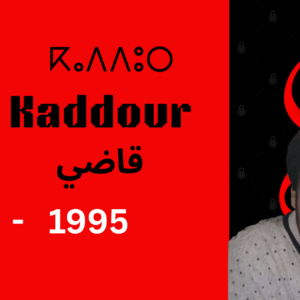
In the early 1990s he eventually moved to the Netherlands, where many Riffians had migrated as workers. He died there in 1995 and was later buried in his hometown of Beni Boukhlef, closing a long circle of struggle, displacement and return.
Legacy: A Name Coming Back from Silence
For a long time, Sellam Amezian’s name was almost absent from schoolbooks and mainstream narratives in Morocco. The official story of independence focused on the monarchy and the main nationalist party, while “difficult” chapters like the Rif Revolt were covered in silence or described as the work of troublemakers.
That began to change slowly in the late 20th and early 21st century. Researchers, journalists and Riffian activists started to revisit the events of 1958–1959, gathering testimonies, archival material and oral history. In this process, Amezian reappeared as a central character: a local leader who refused to accept marginalization and dared to confront a powerful new state just two years after independence.
Today, his story resonates with younger generations, especially in the context of more recent protest movements in the Rif. Many of the demands raised in 1958 – jobs, hospitals, schools, dignity and an end to militarization – echo in the slogans of later waves of mobilization.
Conclusion: Why Sellam Amezian Matters Today
Remembering Sellam Amezian is not just about adding another name to the list of historical figures. It is about understanding the unfinished business of independence, the long-term consequences of marginalizing entire regions and the courage of those who paid the price for speaking out.
Amezian stands at the intersection of many stories: Rif identity, post-colonial power struggles, popular protest and the politics of memory in Morocco. His life invites us to ask difficult questions: Who gets to write history? Whose sacrifices are honored, and whose are forgotten? And what would it mean to build a national narrative that truly includes the voices from the mountains of the Rif?
By revisiting the life of Sellam Amezian, we open a small window onto a larger truth: that the path from colonial rule to genuine freedom is neither straight nor simple, and that the price of silence can be as heavy as the price of rebellion.
ayuuz.